After School Vertical Banner: Social Media Templates & Graphics
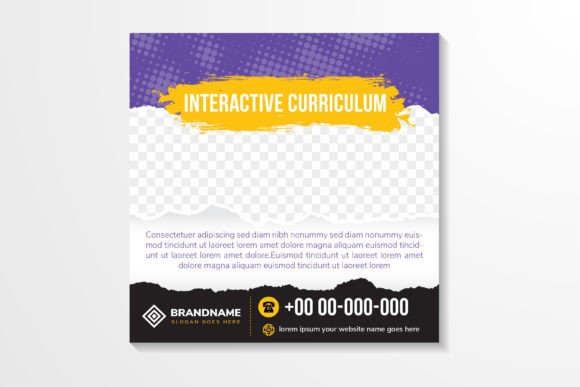
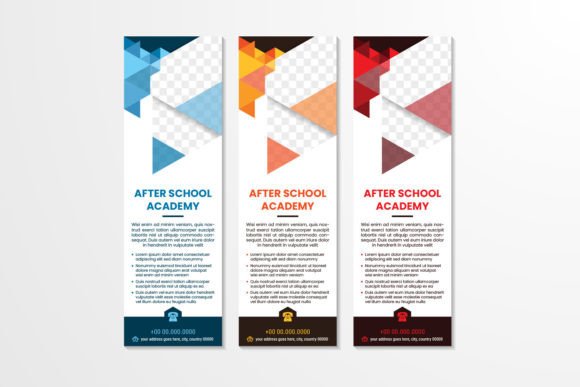
As a graphic designer who’s built brand identities for after-school programs, boutique learning studios, and local enrichment academies over the past 12 years, I opened After School Vertical Banner expecting something functional—but what I found was a quietly confident creative design with strong visual rhythm and intentional whitespace. It’s not flashy, but it’s considered: three vertical banners, each built around a subtle triangle pattern motif that echoes growth, direction, and structured learning—without feeling rigid or academic.
The mood is warm, grounded, and approachable—think handmade business meets modern education branding. The layout leaves generous space for photo collage and headline text, making it ideal for real client work where authenticity matters: a Montessori-inspired studio showcasing student projects, a bilingual literacy program highlighting community photos, or a STEM camp launching its summer enrollment campaign. It reads as “homepage desi” not in literal cultural reference, but in its balanced asymmetry, organic negative space, and human-scaled illustration style—ideal for small business branding that avoids corporate sterility.
Where This Graphic Design Asset Earns Its Keep
After School Vertical Banner shines brightest when used as a hero visual anchor. I recently tested it in a Canva template for a client’s Instagram Story series promoting their after-school art lab—and the triangle motif subtly reinforced their “build, create, evolve” tagline without needing extra graphics. It also performed exceptionally well in product mockups: layered over a tote bag mockup, the vertical flow echoed the natural drape of fabric; on a mug wrap preview, the top-heavy composition kept focus on the headline while letting the pattern recede into texture.
For print-on-demand sellers and Etsy product creators, this is a smart printable design foundation. The clean vector-ready structure (confirmed via SVG inspection) holds up at 24" x 60" poster size and scales crisply down to 8.5" x 11" handouts. As a sticker design or sublimation design, the open collage zone lets crafters personalize with photos or icons—making it versatile across Cricut projects, t-shirt design, and even classroom door decals.
In editorial design and blog visuals, the banner’s vertical orientation works beautifully for Pinterest pins and newsletter headers. Its inherent rhythm supports visual hierarchy: the triangle pattern gently guides the eye downward from headline to supporting text to image zone—no heavy-handed arrows or forced alignment needed. For packaging design, I’ve repurposed one banner’s border motif as a repeating band on custom notebook covers and folder tabs—proving its value beyond standalone use.
Use With Intention—Not Everywhere
This isn’t a universal drop-in asset. After School Vertical Banner loses clarity below 300px height—so skip it for app icons, favicons, or tiny social media profile badges. It also competes in crowded layouts: layer it over busy photography or dense patterned backgrounds, and the triangle element dissolves into noise. I tested it against a textured watercolor background and had to add a subtle white stroke to restore definition.
Avoid pairing it with ultra-minimalist branding. If your client’s identity relies on strict Swiss grid systems, thin sans serifs, and monochrome restraint, this banner’s warmth and illustrative softness may undermine visual trust. Likewise, in professional corporate materials—say, a university continuing education department—it can read too boutique or informal unless carefully anchored with stronger typographic authority.
Designer Notes You Can’t Skip
Before clearing After School Vertical Banner for client use, run these checks:
- Test in black and white—the triangle pattern must retain legibility without color cues.
- Preview on light AND dark backgrounds—some PNG files include semi-transparent edges that flare on dark mode; verify clean cutouts.
- Check file formats: Confirm SVG editability (for resizing without loss) and high-res PNG (300 DPI) for printables.
- Layer it over real mockups—not just flat previews. Does the photo collage zone align naturally with faces or objects? Does text stay readable over varied image tones?
- Test typography pairings: It harmonizes best with friendly sans serifs (like Poppins or Nunito) and gentle display fonts—not tight serifs or aggressive scripts.
- Verify commercial license—especially for print-on-demand sellers and digital product creators. This is a commercial design asset only if explicitly cleared for resale or client deliverables.
One final note: its strength lies in supporting a brand—not defining it alone. Used as part of a design bundle (paired with coordinating icons, patterns, or worksheet templates), it becomes a cohesive thread across social media graphics, website banners, and printed takeaways. That’s where it transitions from decorative clipart to strategic brand identity tool.
Why It Fits Real Client Work—Not Just Stock Libraries
What makes After School Vertical Banner feel like a working designer’s find—not another generic social media template—is its built-in flexibility. The “space for photo collage and text” isn’t an afterthought; it’s a deliberate invitation to humanize the brand. When I added candid shots of kids building robots to one banner, the triangle motif didn’t fight the imagery—it framed it. That emotional resonance lifts audience engagement far more than polished stock vectors ever could.
For marketers building seasonal campaigns, bloggers designing lead magnets, or crafters launching a themed printable collection, this asset delivers professionalism without stiffness. It signals care, clarity, and quiet confidence—exactly what small business branding needs when competing for attention in crowded feeds and local markets. As a digital product, it earns its place not because it’s trendy, but because it solves real problems: balancing warmth with structure, personality with polish, and creativity with usability.