1st Grade Level Unlocked: T-Shirt Designs & Graphics
As a graphic designer who’s built brand identities for over a dozen handmade businesses—from Etsy shops launching seasonal collections to local boutiques preparing back-to-school merch—I recently evaluated 1st Grade Level Unlocked for a real client project: a playful, literacy-focused children’s apparel line targeting parents of early learners. My goal wasn’t just to assess aesthetics—it was to determine whether this graphic design asset delivers functional versatility, commercial readiness, and authentic emotional resonance in live design environments.
A First Impression That Lands with Warmth and Clarity
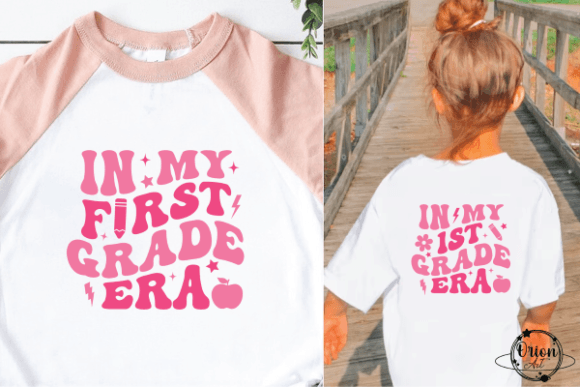
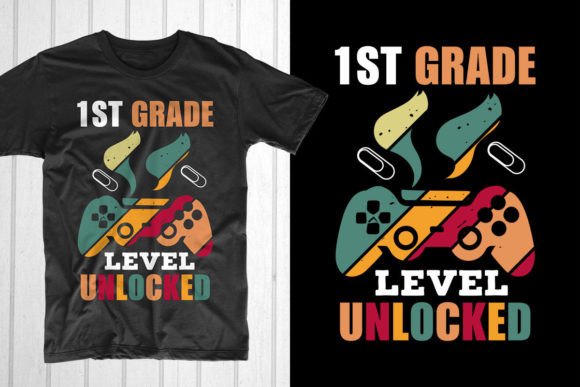
Opening the file, I immediately noticed how 1st Grade Level Unlocked avoids visual noise without sacrificing personality. It leans into joyful minimalism—clean lines, balanced negative space, and a color palette that feels intentional, not algorithmically trendy. The central motif suggests progress, achievement, and gentle celebration—not cartoonish exaggeration or overstimulating detail. That’s critical when designing for real-world use: this isn’t clipart; it’s a considered illustration with breathing room, making it adaptable across contexts from product mockups to social media graphics.
Where It Shines in Real Client Work
In practice, 1st Grade Level Unlocked excels where many digital products falter: supporting brand identity without dominating it. For our client’s t-shirt design rollout, we used it as a hero graphic on front-of-garment placements, then scaled it down as a subtle watermark on packaging tape and thank-you cards. It performed equally well in editorial design—paired with a warm serif font in a printable reading log—and in marketing visuals for Instagram carousels promoting phonics-based workshops.
- Product mockups: Renders crisply at large sizes (e.g., chest print on unisex tees), especially when layered over textured cotton or heathered fabric previews.
- Print-on-demand integration: Works cleanly with standard POD platforms—no anti-aliasing issues or fuzzy edges in PNG exports.
- Cricut projects & sublimation design: The SVG version maintains crisp vector paths, allowing precise resizing for iron-on transfers or vinyl cuts.
- Canva templates & social media graphics: Scales without distortion and pairs intuitively with both sans-serif and friendly script fonts—no clashing contrast or hierarchy confusion.
- Printable design & wall art: Translates beautifully to 8×10” PDFs and classroom-themed digital downloads, thanks to its balanced weight and clear focal point.
Smart Use Cases—and Where to Proceed with Care
1st Grade Level Unlocked is strongest when used as a primary visual anchor: on t-shirts, tote bags, stickers, or campaign banners where warmth and approachability are strategic goals. Its illustrative tone supports small business branding that values authenticity over polish—think indie bookshops, Montessori-aligned makers, or community literacy nonprofits.
That said, it’s not universally deployable. Avoid using it in minimalist corporate materials, legal disclaimers, or professional service branding—its charm relies on context. It can lose impact in crowded layouts (e.g., multi-element flyers) or against busy photographic backgrounds unless carefully masked or overlaid with a subtle drop shadow. And while it reads clearly at 3–4 inches wide on apparel, I’d hesitate to use it smaller than 1.5 inches without testing legibility—especially for younger audiences or low-vision users.
Designer Notes You Can’t Skip Before Client Use
Before clearing 1st Grade Level Unlocked for commercial design, I ran these checks—non-negotiable for professional work:
- Tested all file formats: PNG (with alpha transparency confirmed), SVG (fully editable paths, no embedded raster), and EPS (for legacy print workflows).
- Previewed in black and white to verify contrast and silhouette integrity—critical for embroidery or single-color screen printing.
- Checked readability on light, dark, and mid-tone backgrounds; adjusted opacity slightly for dark-mode web graphics.
- Placed it on realistic product mockups—not just flat previews—to assess scale, proportion, and emotional fit.
- Verified commercial license terms: confirmed unlimited usage for client projects, including resale on POD, Etsy, and physical goods—no attribution required.
- Compared pairing compatibility with common type families: worked seamlessly with Poppins (sans), Playfair Display (serif), and Caveat (handwritten), but felt visually heavy next to ultra-thin display fonts.
Why This Graphic Design Asset Earns a Place in Your Toolkit
What sets 1st Grade Level Unlocked apart from generic t-shirt design bundles isn’t novelty—it’s restraint. In an oversaturated creative marketplace, it avoids chasing trends and instead offers quiet confidence: a design that supports storytelling rather than shouting over it. For designers building cohesive brand systems, it functions as a reliable visual anchor—not a one-off decoration. It reinforces trust because it feels human-made, not AI-generated: consistent stroke weights, intentional spacing, and emotional nuance that resonates with caregivers, educators, and kids alike.
When used thoughtfully—as part of a larger visual language—it elevates everything from a simple sticker sheet to a full seasonal campaign. It doesn’t ask to be the only voice in the room. It asks to be heard clearly, kindly, and consistently. That’s rare. And for small business branding, handmade businesses, and digital sellers building long-term recognition? That kind of reliability is worth more than flash.